Mobile car detailing near you in 60 seconds.
Tell us what you drive, where it sits, what is bothering you, and when you need it done. We turn that into a useful request and return matched local options with price bands, photos, and a plain reason each one fits.
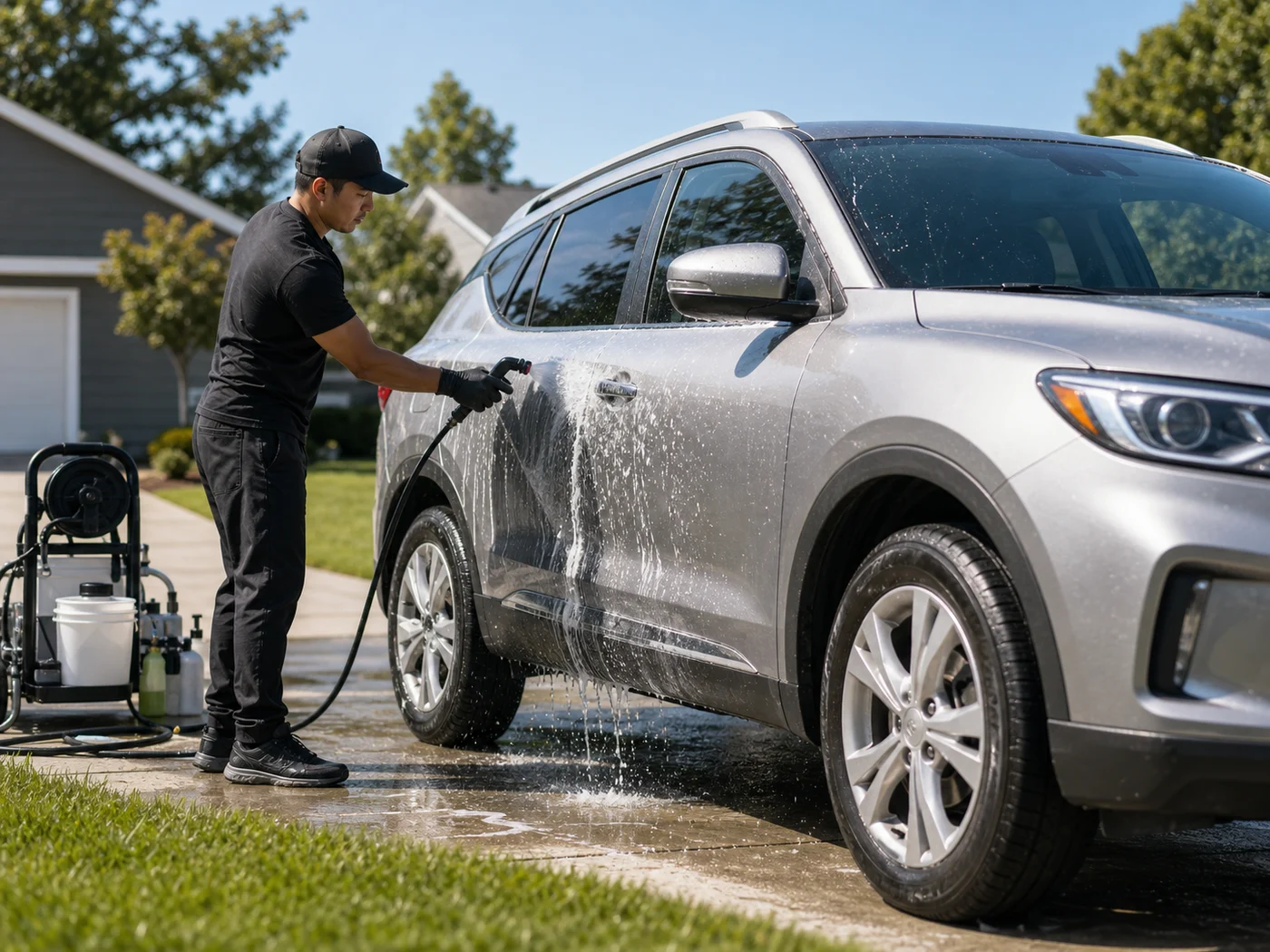
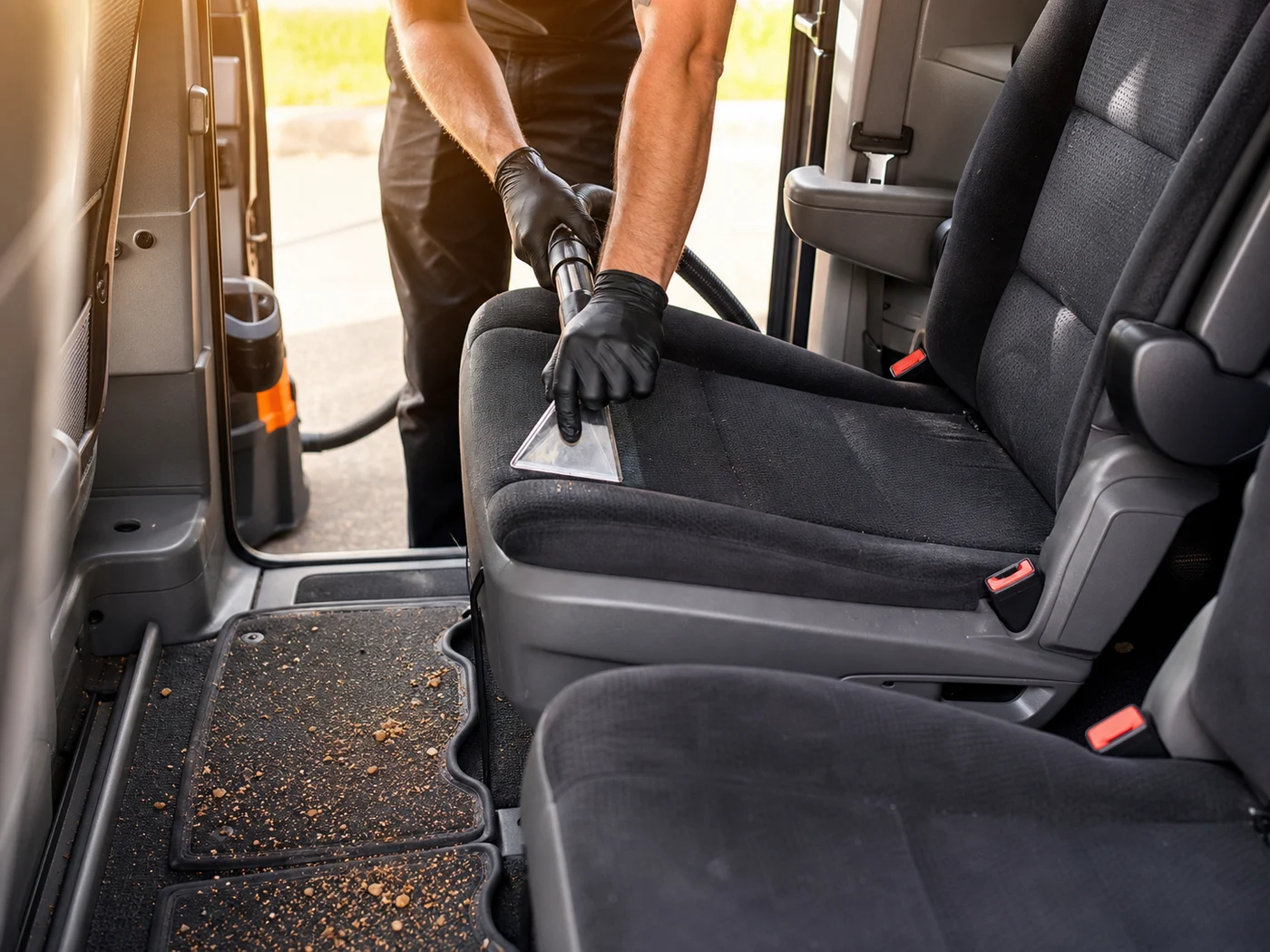
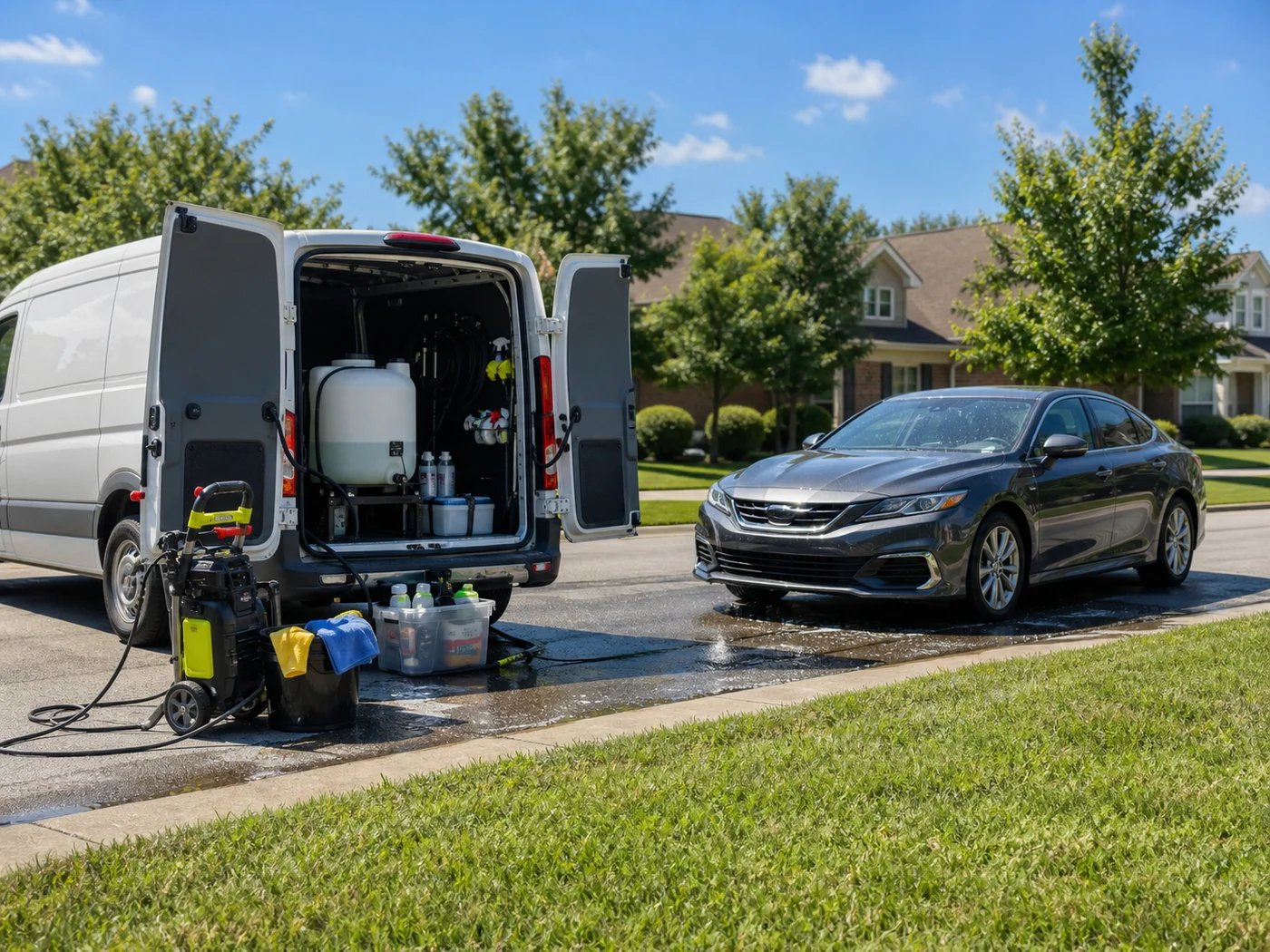
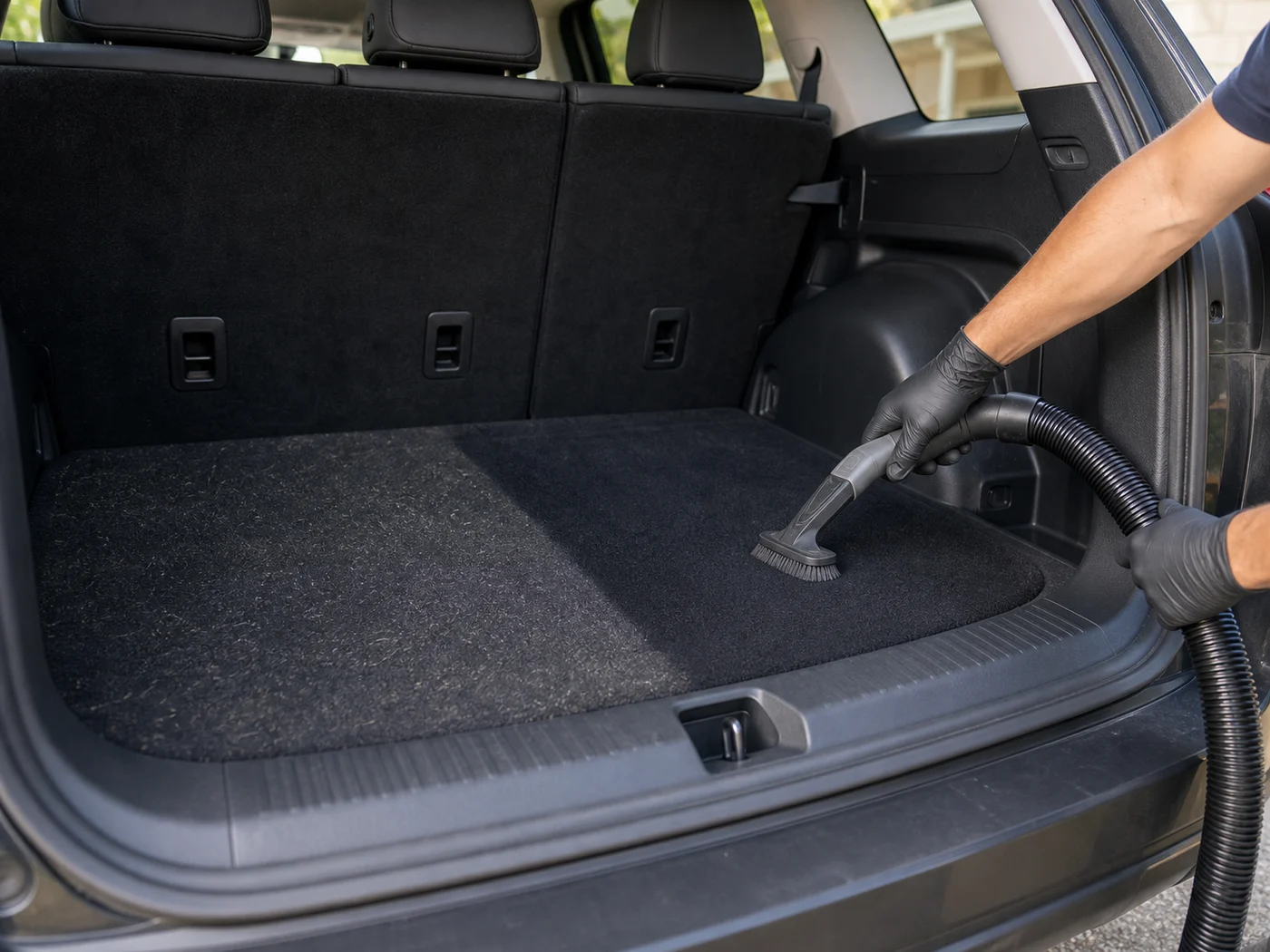
Photos, reviews, price bands, and the reason a detailer fits your car.
 Yates Car Wash & Detail Center
  Mint Mobile Detail
  Clean Mobile Detailing
  Complete Auto Detail & Car Wash
  White Glove Auto
  GoDetail Car Detailing
  SHWASH Mobile Car Detailing Austin
  Hyer Quality Detail Yates Car Wash & Detail Center Mint Mobile Detail Clean Mobile Detailing Complete Auto Detail & Car Wash White Glove Auto GoDetail Car Detailing SHWASH Mobile Car Detailing Austin Hyer Quality Detail
 I had a dog-hair SUV and did not want to call ten shops. The useful part was seeing which detailer actually handled pet hair and what that add-on usually costs.
I wanted ceramic coating, but my driveway gets direct sun all day. The match separated mobile prep from shop-only coating, which made the quotes make sense.
The car smelled like smoke and I had no idea what to ask for. The request included ozone, cabin filter, and interior extraction so the replies were specific.
Yelp gives you fifty. We narrow the list.
What you are actually paying for.
A useful quote starts with the details people usually forget: the vehicle size, the mess, the deadline, and whether the work can happen in a driveway or needs a shop bay.
If you say "full detail" without context, every shop hears a different job. A commuter sedan with dust is not the same as a three-row SUV with pet hair, spilled juice, and a smoke smell. The concierge keeps those details attached to the request so the options you get back are easier to compare.
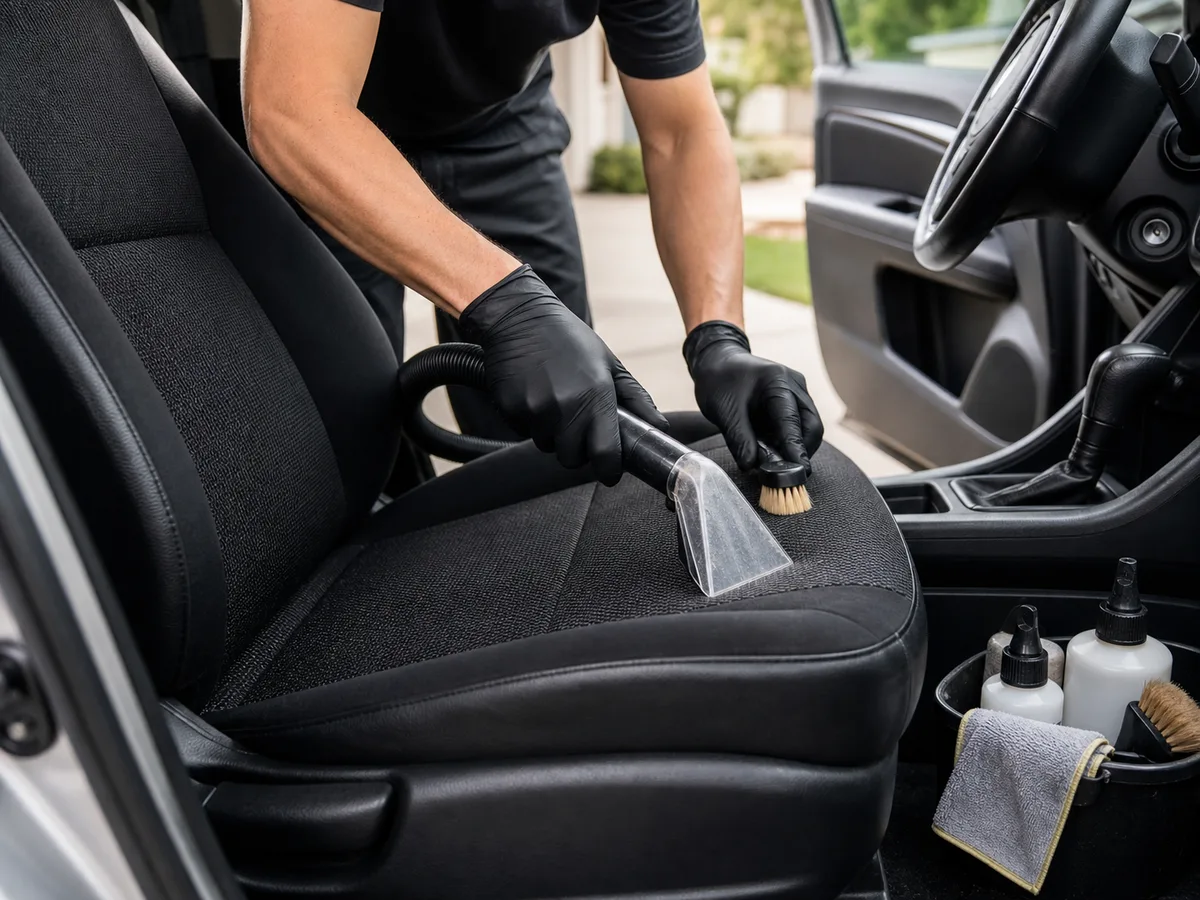
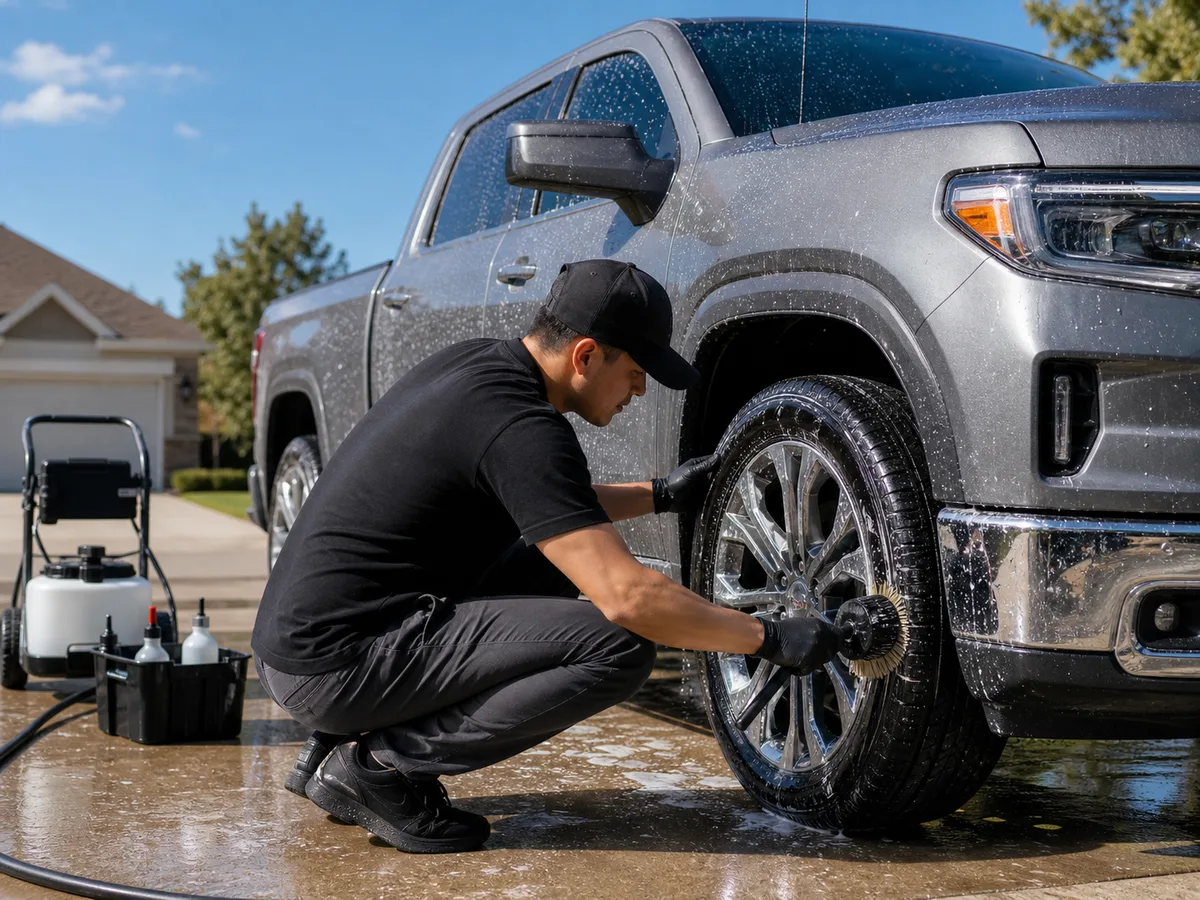
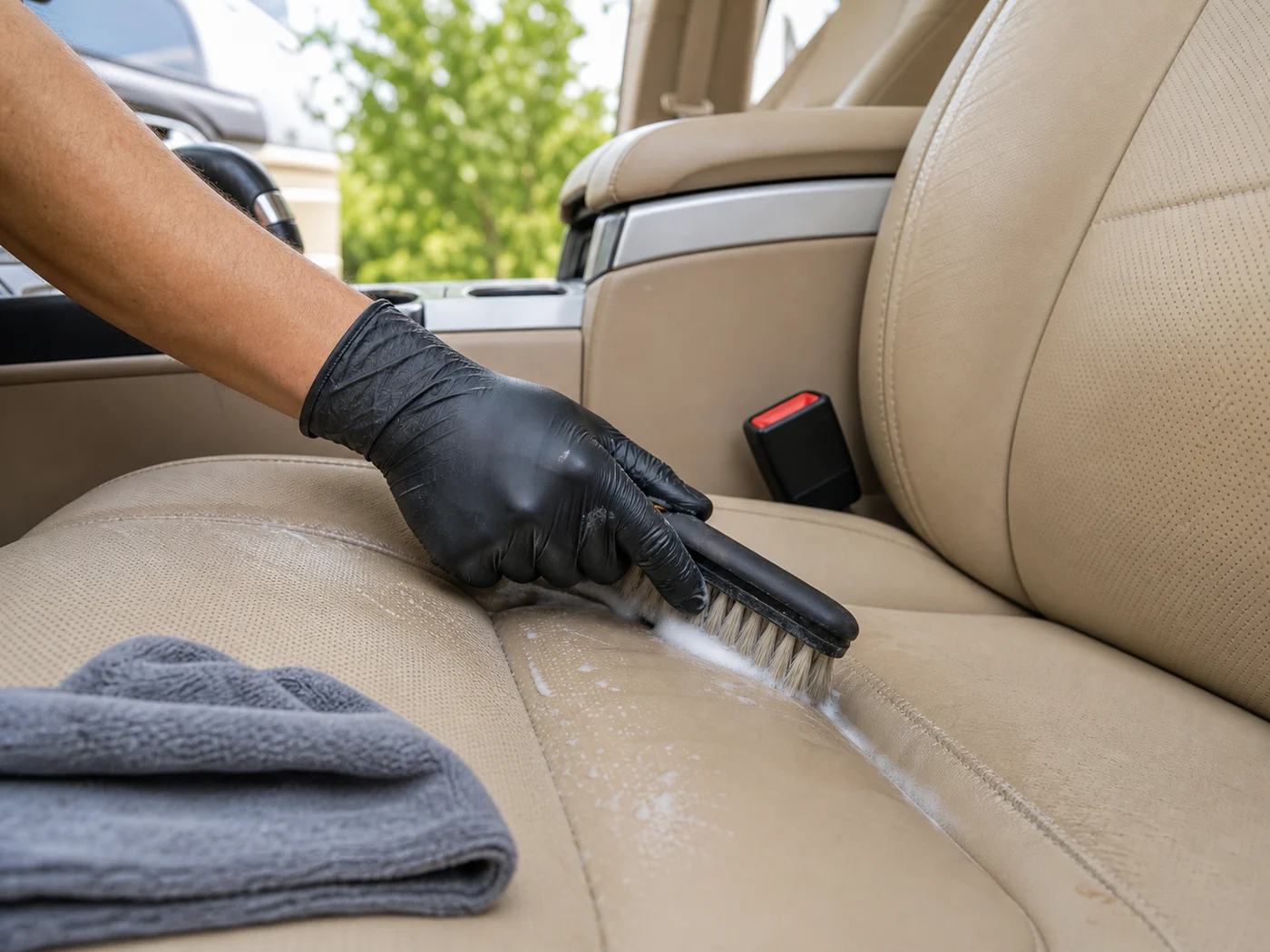
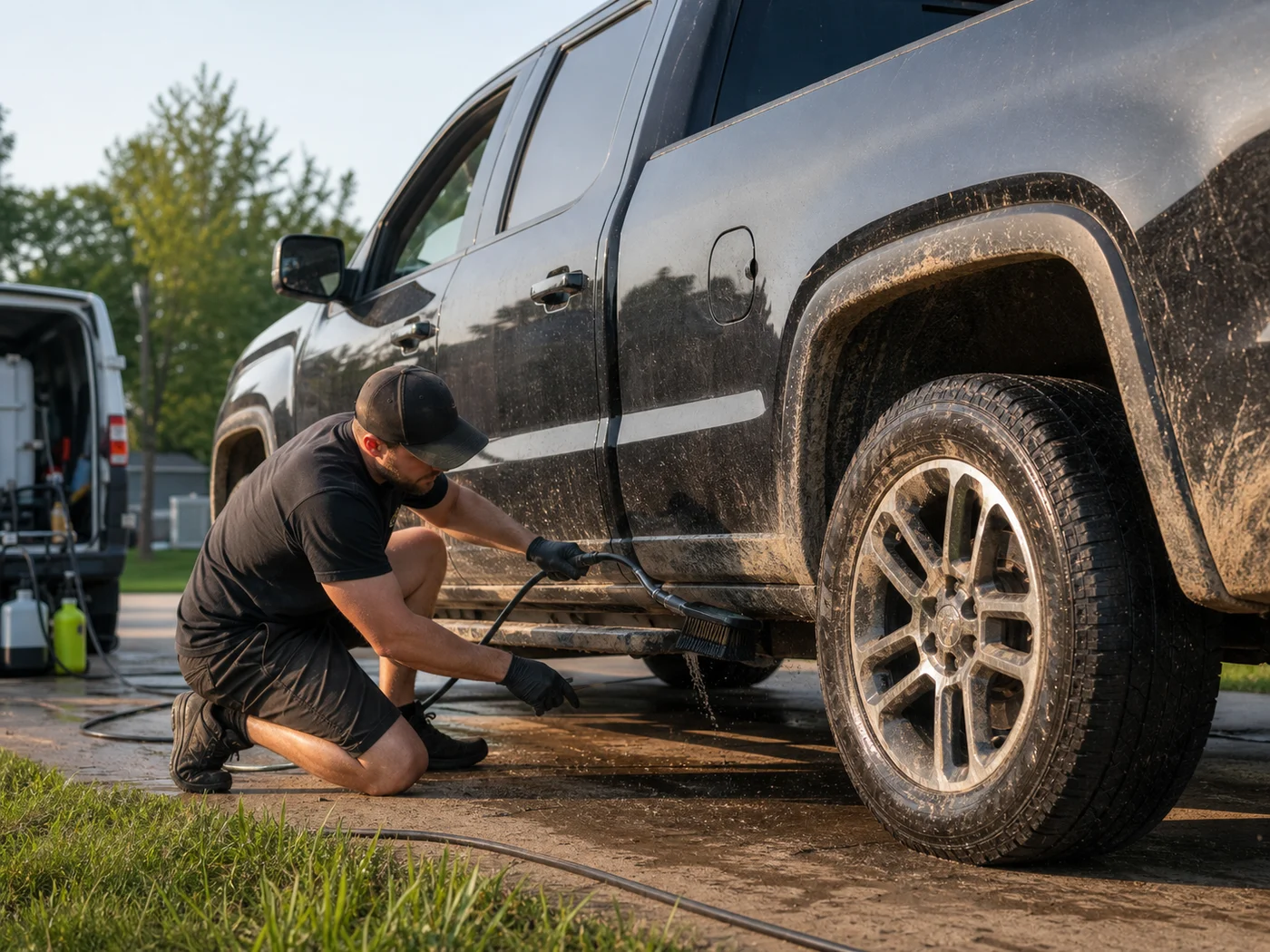
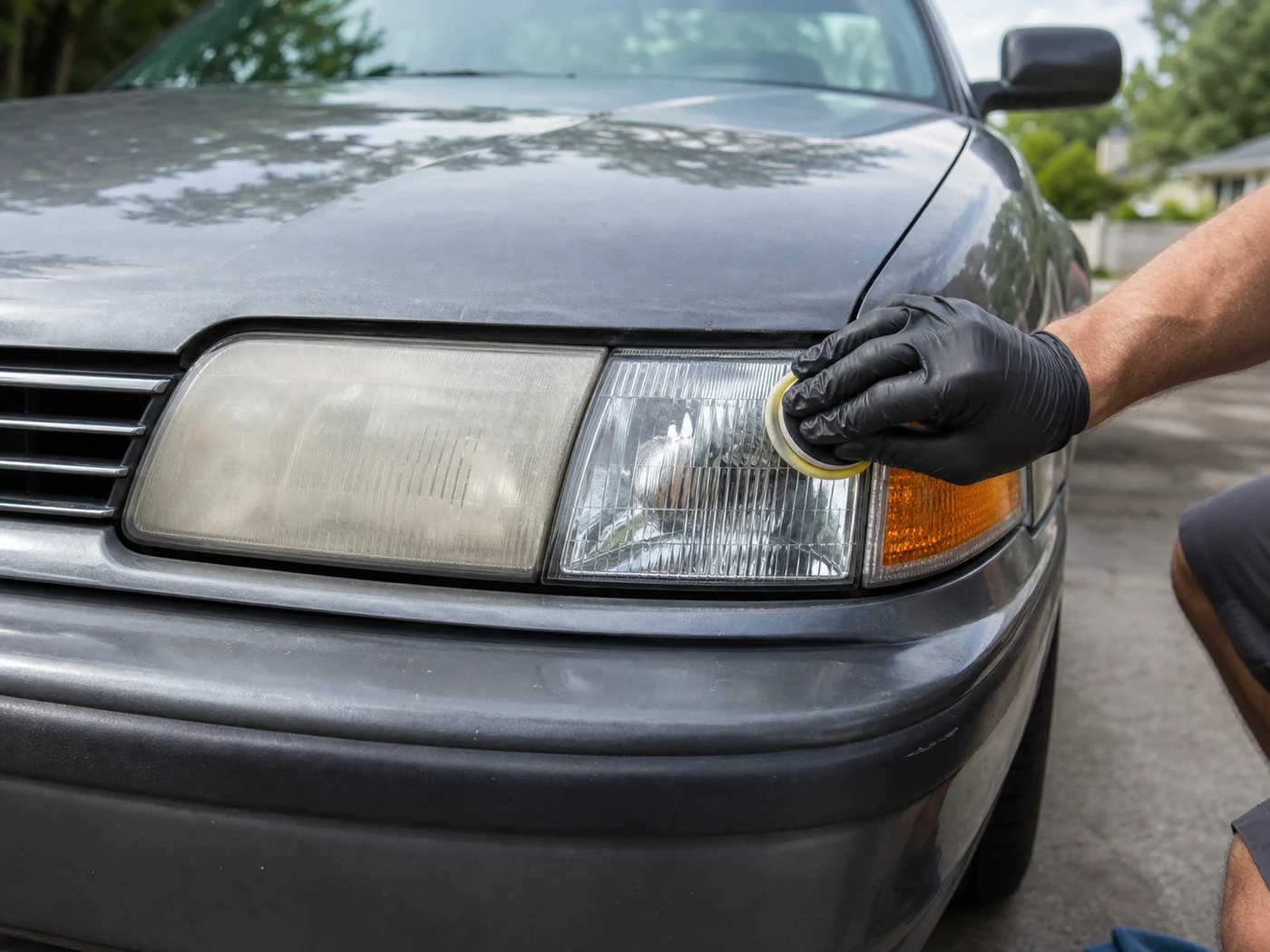
For exterior work, the big price movers are vehicle size, wheel grime, water spots, sap, and whether the paint needs clay, polishing, or a coating. For interiors, it is usually pet hair, food spills, smoke, sand, and third-row seating. Say those things up front and the quote gets a lot less fuzzy.
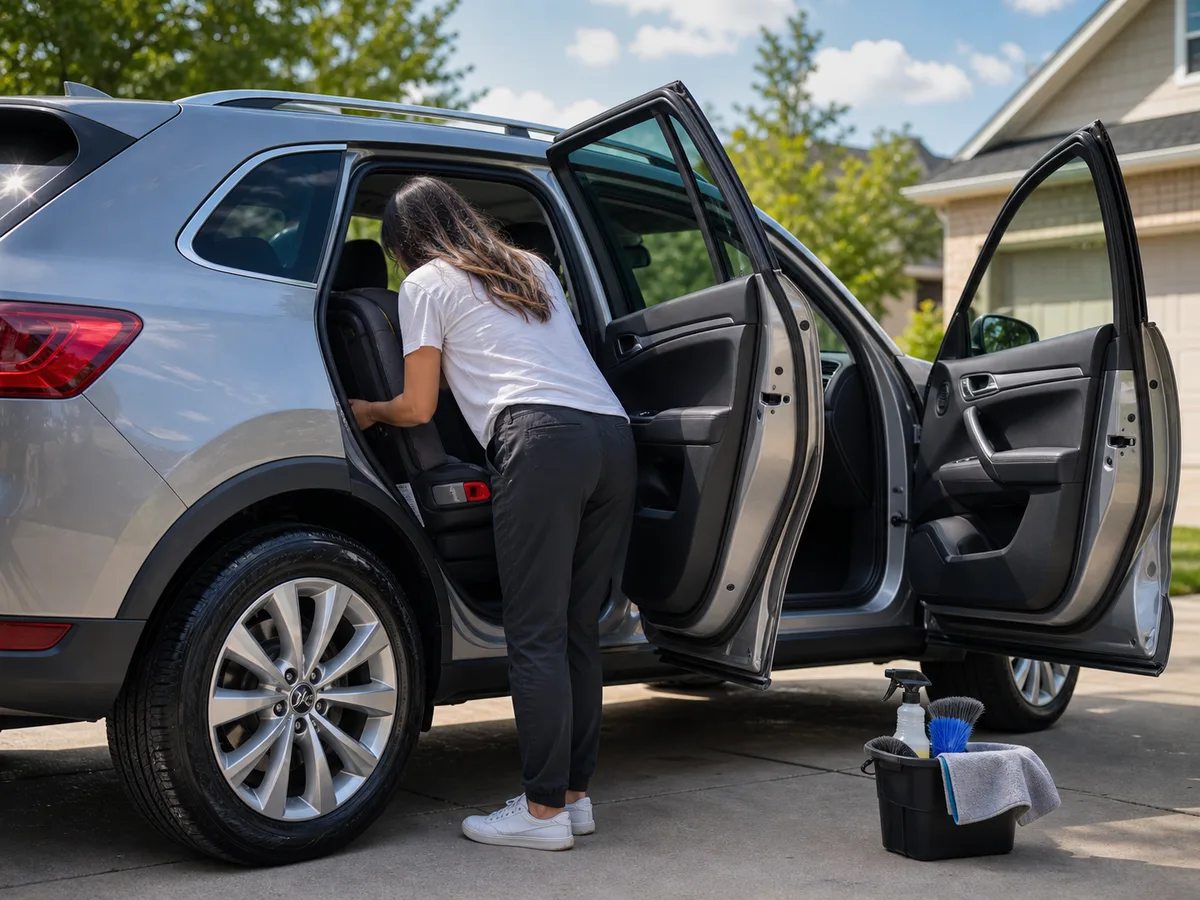
"Mobile" mostly means convenience: the detailer comes to your driveway, office lot, or apartment parking area. Some jobs still belong in a shop, especially multi-stage paint correction and ceramic coating. When that matters, we call it out instead of pretending every service can happen anywhere.
Pick the job you need. We keep the messy details attached.
- Typical price
- $600 – $2,000
- Duration on-site
- 1 – 2 days
- Best for
- New cars, leased vehicles, drivers who hand-wash
Real price ranges, not "$$ – $$$" icons.
Prices vary by metro and vehicle. Trucks and luxury vehicles trend 30–60% above the sedan baseline. For a complete cost breakdown by city and vehicle type, read our mobile detailing cost guide →
The same five detailers exist on Yelp. You'd just have to find them yourself.
Start where demand is already showing up.
You can do this yourself. Should you?
The cheap version of an exterior detail is achievable in a weekend with $80 of supplies — a foam cannon, a pH-neutral wash, a microfiber drying towel, a clay bar, and a sealant. The hard parts are paint correction (you can permanently burn through the clear coat with a rotary polisher) and interior extraction (a rental carpet extractor leaves the seats damp for two days and half-clean).
A reasonable rule: if the car costs more than $20,000 or you plan to keep it more than three years, the math favors a professional twice a year and a quick wash in between. Anything involving paint correction, ceramic coating, or pet biohazard goes to a pro — full stop.
The other reason to use a pro: time. A weekend DIY full detail is 6–8 hours, plus a trip to the store, plus the cleanup. A mobile detailer arrives in your driveway, the car never moves, and by the time you finish your second coffee they're handing you keys to a car that smells correct.
Sound right? Start the concierge →
358 metros indexed. 1098 screened profiles, updated by the data pipeline.
Sedans, SUVs, trucks, luxury — the price grid is not flat.
Drop-off detailing made sense in 1995. It doesn't anymore.
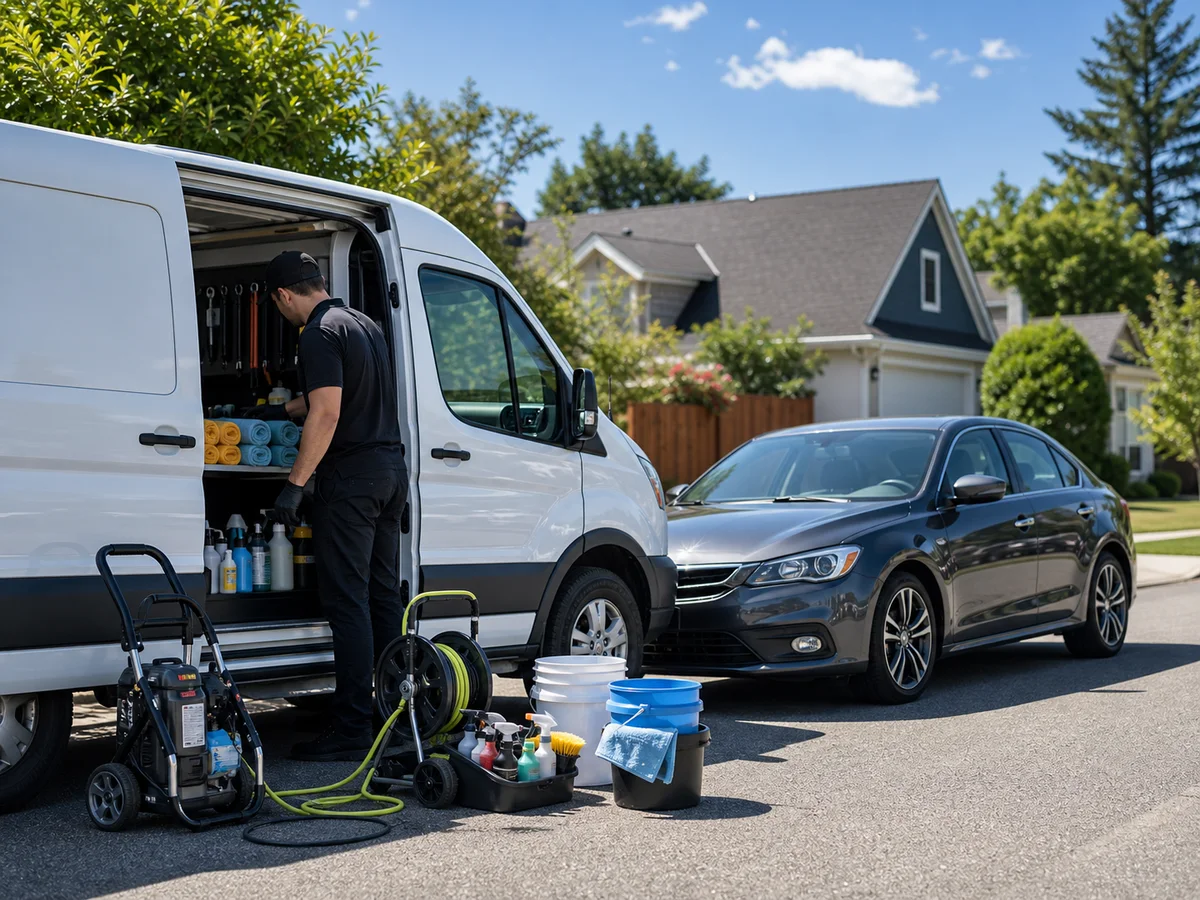
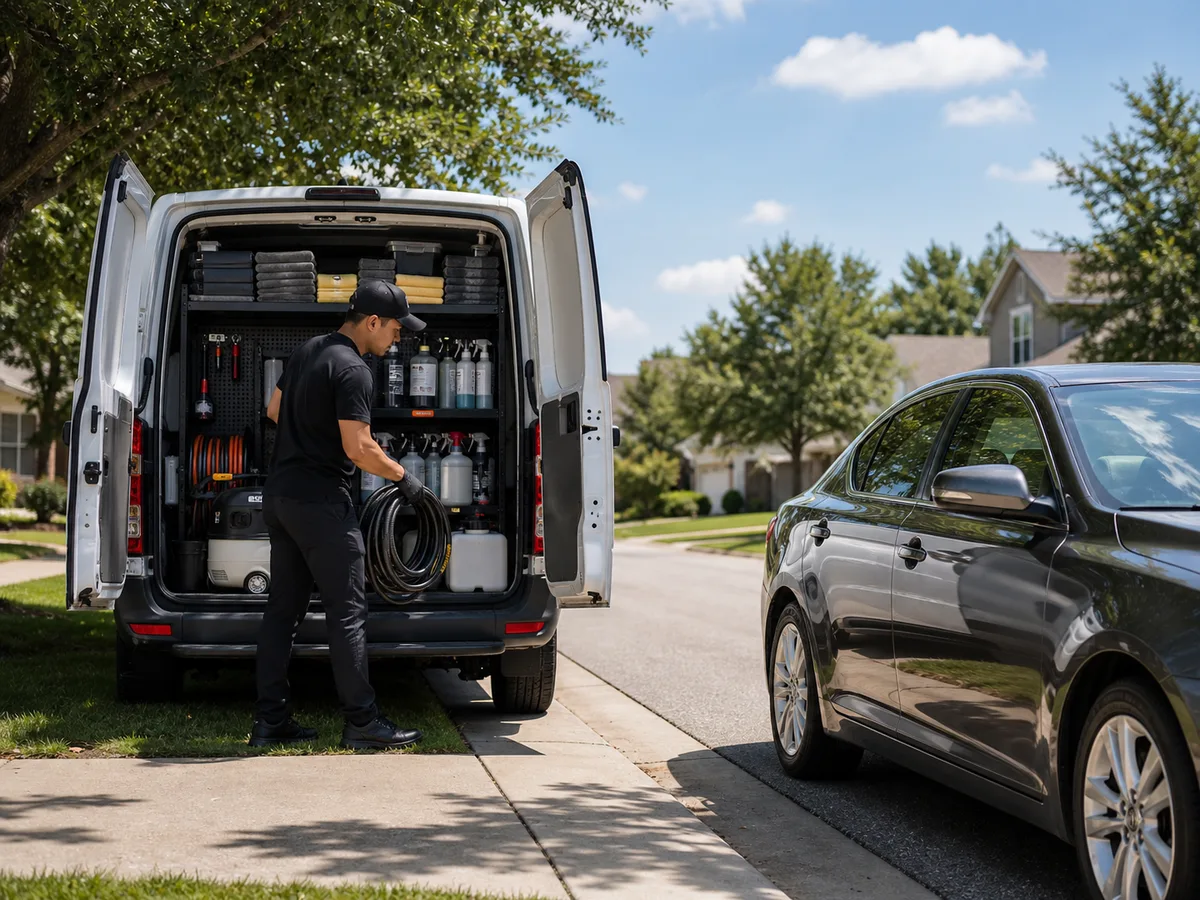
The traditional model of detailing assumed you'd hand the keys over at 8am, ride home, and pick the car up at 5pm — a full workday gone, plus the rideshare both ways. The mobile detail unwinds that assumption: the operator's van is the shop. Power, water, vacuum, polisher, lift, every chemistry — it all rolls up to your driveway. You don't lose the car, the time, or the ride home.
The second under-discussed advantage is that the same person touches your car every time. At a brick-and-mortar shop, the person who polished your paint last March is rarely the same person who has the buffer in their hands this December. A mobile detailer is almost always the owner-operator. They remember which side panel had the stone chip, which seat had the spill, which corner of the headliner the toddler reached. That continuity is impossible to replicate at scale and it shows up in the quality of the third visit.
The third — and this is the one nobody says out loud — is safety. A real detail involves chemistry strong enough to lift embedded grit out of clear coat. A bad detailer with a rotary polisher and the wrong pad combination can permanently burn the paint in under thirty seconds. When the work happens in your driveway and the operator is a sole proprietor whose phone number is in your contacts, accountability is built in.
For people who hand-wash their own car between professional visits, the mobile model has another quiet benefit: you can watch how the pro does it. Most reputable detailers will explain their process if you ask — which sealant they're applying, why they're starting on the wheels, where they're claying versus polishing. Two hours of casual observation is worth more than every YouTube tutorial you've watched.
That said, mobile detailing has real limits. Multi-stage paint correction and ceramic coating both want a covered, climate- stable environment for the cure window. A good detailer will tell you if they can do a job at your address or if the work needs to happen at their shop. If you hear "yeah we can do it on your driveway in any weather," push back — that's a red flag, not a perk.
The eight problems detailers see most.
Two questions every detailer wishes you'd ask.
When in the year should I detail?
The defensible answer is twice — once at the end of winter to undo the road salt, brake dust, and grit; once at the start of fall to repair summer's bird droppings, sap, and bug-strike, and to put a fresh sealant on before the snow comes back. People in mild climates can drop to once a year. People in coastal climates with year-round salt exposure should detail three times.
Outside of those seasonal anchors, schedule a detail two weeks before any of: a road trip longer than 8 hours, a vehicle sale, an end-of-lease inspection, or the photos for an insurance claim. Detail-before-photograph is the single highest-leverage 4-hour decision a car owner makes.
Is mobile detailing eco-friendly?
The good mobile detailers run a closed-loop water system: a collection mat under the car catches the runoff so the soaps and contaminants don't enter the storm drain. Some are steam-based or "waterless" — they use a high-lubricity spray and microfiber to lift dirt without rinse runoff. These are legitimate options for most jobs, though heavily-soiled vehicles still want a real foam-and-rinse.
The bad mobile detailers run a garden hose into the street. That's an environmental violation in most U.S. municipalities, and it should make you ask other questions about their work. When the concierge surfaces your local options, the eco-method is in the merchant brief — ask, and you get the honest answer.
Free listing. Pay $5–15 when a customer actually books.
Questions we get before the first message.
How is this different from Yelp or Thumbtack?
What does mobile car detailing cost?
Do you charge me anything?
How fast can I get my car detailed?
What if I don't know what service I need?
Are these detailers vetted?
Can I get a quote without talking to anyone?
What if a detailer doesn't show up?
Explore related pages
Compare mobile detailing options
Review nearby service choices, pricing research, and interior detailing needs.